
Your needs, this model
Does it fit your priorities?
What is in the exact 9216-01 package, and is it cordless?
SKIL's selected 9216-01 page lists a reciprocating saw, wood-cutting blade and hex key. This is a 120V corded mains tool, not a cordless platform kit; the package does not list a battery or charger. Plan a suitable outlet and a safe lead path, and check that the exact model suffix on any offer is 9216-01.
Explore this need in the finder →Does 9216-01 provide a tool-free blade change and an adjustable shoe?
Its exact page identifies a tool-less clamp and pivoting foot. The linked family manual explains that the footplate tilts and can slide to a depth position, but sliding it requires loosening and retightening two screws with the supplied hex wrench. Unplug the tool before changing a blade or making adjustments, confirm the blade is held securely, and keep its tip extending beyond the footplate through the stroke.
Explore this need in the finder →What does the 9A 9216-01 actually document versus the 7.5A 9206-02?
SKIL's 2026 catalog gives both saws a 1-1/8 in stroke and an 800-2,700 SPM range. The 9216-01 is listed at 9A and adds a power-on indicator and rubberized grip that its shared manual labels as 9216-only. Those are documented configuration differences, not a measured claim that the 9A saw cuts faster. The 9216-01's exact page and catalog both list 7.2 lb tool/weight; compare the exact page rather than assuming a kit carry weight.
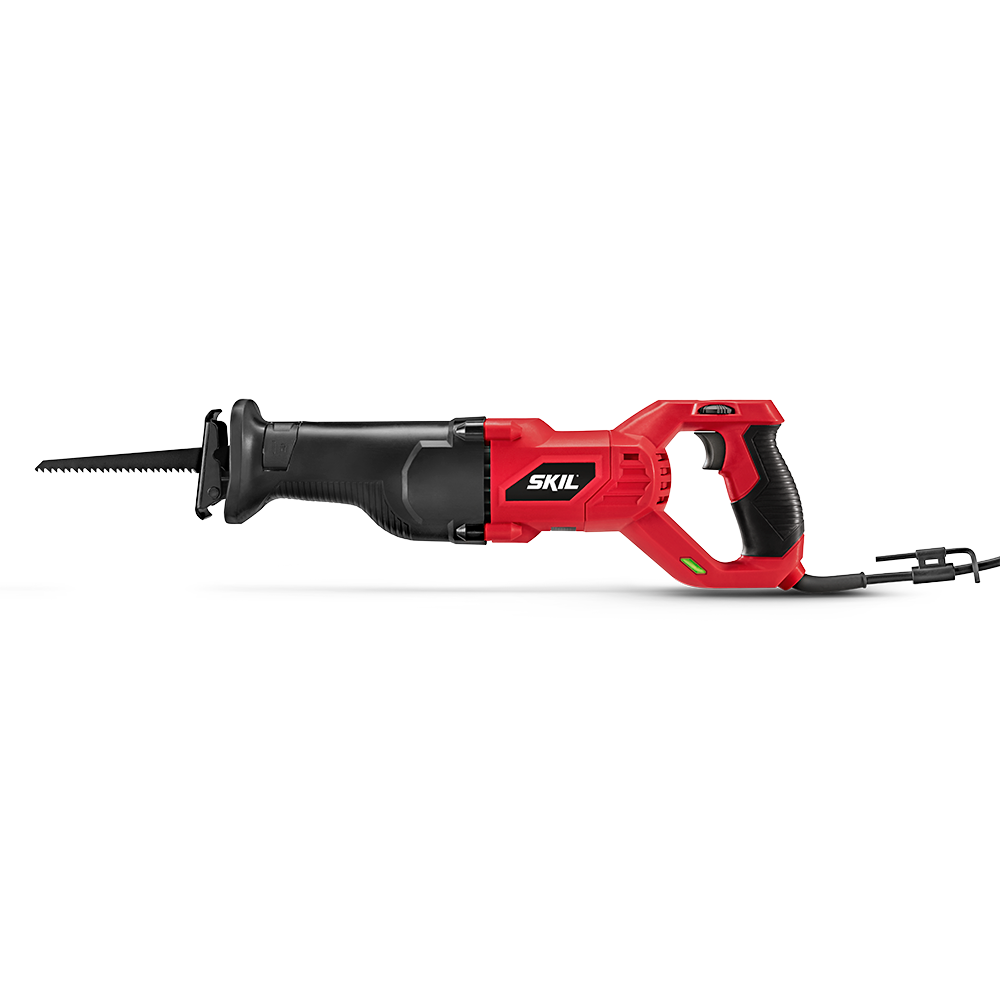
Explore this need in the finder →The SKIL 9216-01 is a full-size corded reciprocating saw built around a 9-amp motor, a tool-free blade clamp and a pivoting footplate. This assessment uses the exact U.S. 9216-01 product page, its linked manual for the shared 9206/9216 family, and SKIL's 2026 catalog. It is source-based, not a hands-on test. The meaningful fit question is whether a mains-powered saw with this body and package suits the work—not whether an amp rating predicts a particular cut.
What the 9216-01 documents
SKIL lists 9 amps at 120 volts and a 1-1/8-inch stroke. Its catalog gives a variable-speed range of 800 to 2,700 strokes per minute; the linked manual describes a six-position speed dial and says its speed can be adjusted during cutting. Higher settings are generally intended for faster cuts or softer materials, while lower settings are suggested for harder materials or more deliberate control. Those are manufacturer operating descriptions, not test results. They do not establish how quickly this saw will cut a given pipe, nail-embedded board or demolition assembly.
The exact product page labels tool weight as 7.2 pounds and gives an 18-inch length, 3.6-inch width and 5.5-inch height. That bare tool figure is useful for comparison with other documented saws, but it is not an assembled carry weight with accessories or a shipping-package weight. The body has a front barrel grip and rear handle, so it is a two-hand saw; it is not a compact one-handed HACKZALL-style format merely because it is shorter than some demolition saws.
Blade and shoe controls
The page calls the blade change tool-less, and the family manual shows a spring-loaded clamp released by a lever. It instructs the operator to unplug the saw before changing a blade or making adjustments, then confirm the blade is retained by the clamp pin. The blade must extend beyond the footplate for the whole stroke; the manual cautions that an overly short or sharply canted blade can jam and break. Tool-free describes the mechanism, not a reason to skip isolation or the seating check.
The footplate both pivots to keep its face against the work and slides to change its depth. These are distinct motions: tilting can be done to meet a surface, while changing the extension depth requires loosening and retightening two screws with the supplied hex wrench. That arrangement is useful for choosing support and limiting blade protrusion, but it is not a wrench-free shoe-length adjustment. The manual also advises keeping the shoe firmly against the work to reduce jumping and vibration.
What distinguishes it from the 9206-02
The 9216-01 shares a 1-1/8-inch stroke and 800–2,700 SPM catalog range with SKIL's 7.5-amp 9206-02. The 9216-01 is listed at 9 amps; its exact manual labels the power-on indicator and rubberized grip as features of model 9216 only. SKIL's exact product page also lists that 9216-01 configuration with a wood-cutting blade and hex key. The 9206-02 page lists its own saw, wood blade and hex key, and documents a pivoting foot. These specification differences are real, but they do not show a controlled cut-speed, vibration or durability advantage for one model.
SKIL describes the counterbalance as providing vibration control. That is a manufacturer feature statement, not a measurement of hand-arm exposure or a comparison with another saw. A user should still support and clamp the work as appropriate, maintain a secure grip, and select a blade suited to the material. The manual's guidance about keeping the footplate against the work matters more to setup than a promise inferred from a label.
Power and package planning
This is a 120V corded tool, not a battery-platform saw. Its exact selected package lists one saw, one wood-cutting blade and one hex key; it does not list a battery or charger. A wood blade is a useful starting accessory, not a universal blade for metal, plastic, pipe or mixed demolition. Check the blade's shank and length against the manual and job, and plan for an outlet, a correctly chosen extension lead when needed, and a cord route clear of the blade, debris and foot traffic.
SKIL's manual says to secure the material and use appropriate blades; it warns against plunge cutting into metal and calls for edge-starting or a drilled opening in hard material. The saw's adjustable shoe supports the workpiece, but does not make an unstable cut safe. For overhead or confined work, the cord, 18-inch body and the need to keep the shoe braced may matter more than the nominal motor rating.
Who should keep it on a shortlist?
It is a plausible candidate for someone who wants a full-size two-handed saw on a suitable mains supply, needs a documented tool-free clamp and pivoting shoe, and is comfortable using a hex key for shoe-depth changes. Its 7.2-pound tool-only figure is stated consistently by the exact page and catalog. Readers who must stay below a strict bare-tool ceiling can use that documented figure, while remembering that actual carried weight includes any blade and accessories they add.
This page does not establish current stock, a sale price, a measured cutting rate, noise, service life or personal comfort. It also does not document a selectable orbital mode, a lock-on switch or a battery option for the 9216-01. Verify the exact suffix, package list and manual before ordering or operating; this assessment does not claim ownership, testing or measured performance.
Key specifications
Key details at a glance
| Saw format | Full-size, two-handed saw |
|---|---|
| Power source | Corded mains power |
| Motor current | 9 A |
| Stroke length | 1.12 in |
| No-load stroke rate | 2700 SPM |
| Tool-free blade change | Yes |
| Bare-tool weight | 7.2 lb |
| Overall length | 18 in |
| Battery in this package | No |
| Charger in this package | No |
Use the exact model’s instructions for operating limits, supplied equipment and version differences.
Sources for this review
Sources for this assessment
- SKIL exact selected 9216-01 U.S. product page
- SKIL owner manual linked from 9216-01 page; cover names 9206 and 9216
- SKIL 2026 U.S. product catalog, corded reciprocating-saw entries
- SKIL exact 9216-01 parts list
- SKIL U.S. consumer product recall page checked for exact saw model numbers
- SKIL exact-page 9216-01 primary tool image

Match the saw to your actual work.
Use the finder to compare verified requirements, then read each exact model assessment before deciding.