
Your needs, this model
Does it fit your priorities?
Is the compact DCS367P1 intended for one-handed cutting?
No. The DCS367 Type 1 manual says to hold the saw firmly with both hands for cutting. Compact describes the body; it is not evidence that one-handed use is supported.
Explore this need in the finder →Does DCS367P1 meet a 5 lb bare-tool limit while supplying a battery and charger?
The exact page expressly says 5 lb tool-only and lists a DCB205 5.0Ah pack and DCB115 charger. The 9.13 lb assembled-product field is a separate package-level specification and should not replace the tool-only number.
Explore this need in the finder →What is the exact package difference between DCS367B and DCS367P1?
DCS367P1 is the kit SKU: its exact page lists one DCB205 5.0Ah battery, DCB115 charger and storage bag with the DCS367 saw. DCS367B is a distinct tool-only configuration with battery and charger sold separately.
Explore this need in the finder →A compact body with a kit-level upgrade
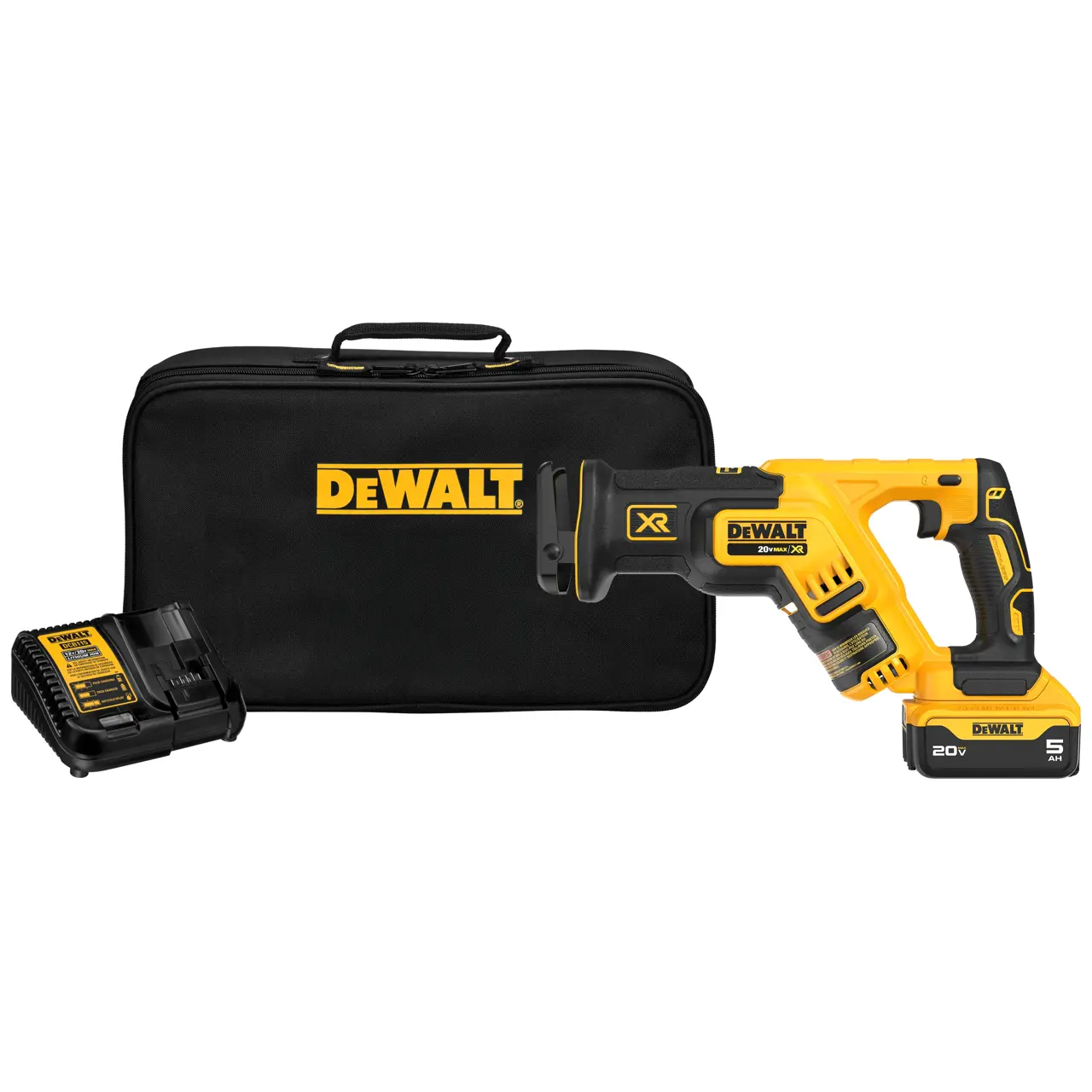
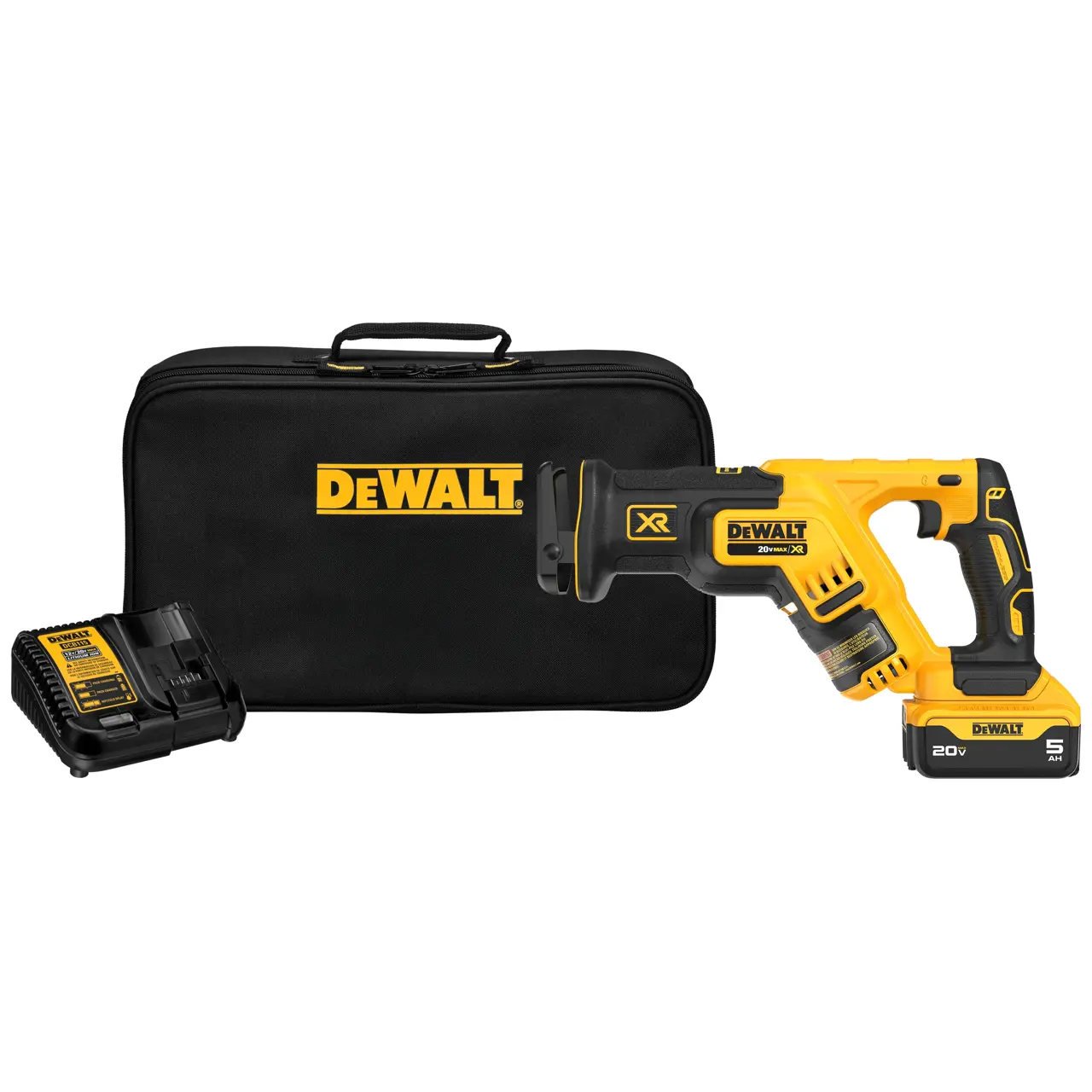
The DCS367P1 is the kit counterpart to DEWALT’s compact-bodied DCS367 saw. The exact U.S. product page calls it a 20V MAX XR brushless reciprocating saw and lists the saw, one DCB205 5.0Ah battery, a DCB115 charger and a storage bag. That is the practical distinction from the DCS367B tool-only SKU: the P1 package puts a named battery and charger in the box, rather than asking an existing 20V MAX owner to supply them. The exact gallery photo shows the compact saw, 5Ah pack, charger and bag, so the pictured arrangement agrees with the page’s package list.
“Compact” here describes the saw’s body, not a one-handed operating style. The linked Type 1 DCS367 instructions say to hold the saw firmly with both hands during cutting. DEWALT’s page gives a 14.5-inch compact length and says it fits between studs and other tight locations, but those dimensions do not guarantee access to every obstructed cut; the blade, shoe, hand positions and surrounding structure all need room. If your task depends on a true one-handed form, compare the separate ATOMIC models rather than reading the adjective as a grip specification.
What the weight numbers do—and do not—say
The feature list expressly says “Only 5 lbs. In weight (Tool Only).” That is a useful, unusually clear bare-tool specification for comparing the saw itself. The product record separately gives 9.13 lb as assembled-product weight for this kit. The two numbers use different bases; the second is not a battery-on measurement made by us, and neither should be substituted for the other. A buyer setting a strict maximum bare-tool weight can use the five-pound manufacturer statement, while someone planning a carry load should check the actual tool, pack and bag arrangement rather than assume the assembled listing represents how it will feel at the grip.
Other stated details are a brushless motor, 1-1/8-inch stroke, variable trigger up to 2,900 SPM, LED, and a keyless four-position blade clamp. Multiple blade orientations can help with clearance and flush-cut setups; they do not replace a blade suited to the material or a stable workpiece. The page does not establish a pivoting shoe, a selectable orbital mode or a named cut-capacity range for this exact product, so those should remain open questions if they are important requirements.
Package choice versus the DCS367B
For a buyer already equipped with compatible 20V MAX batteries and a charger, the DCS367B is the more direct tool-only purchase scenario; its exact page says the power equipment is sold separately. DCS367P1 is easier to compare as a complete package because DEWALT names the included DCB205 5.0Ah pack and DCB115 charger. The P1 suffix matters: a generic product photograph or a search result for “DCS367” alone may not prove which package is being offered. Verify the entire catalog number and written contents before ordering, especially if a listing groups bare tools, kits or retailer bundles together.
The product page attributes up to 2.5 times longer runtime to its brushless motor. That is the maker’s comparison, not an independent runtime test or a promise that a particular battery will complete a particular cut list. Cutting time changes with blade tooth pattern, material, load, battery condition and technique. The 2,900 SPM figure is also a stated speed ceiling rather than a measured loaded cutting result. This assessment is based on the exact manufacturer page and the DCS367 instructions; it does not report hands-on use, cut tests or measured durability.
Blade access and safe setup still matter
The four-position clamp adds useful orientation options, but the instructions remain more important than a convenience feature. Disconnect the battery before changing a blade, seat and retain the shank as shown in the manual, and use a blade long enough to remain beyond the shoe and stock through the stroke. Secure the workpiece and keep the free hand out of the blade path. A short body can help reach a tight bay, but it does not make a vibrating reciprocating cut controllable if the material is unsupported or the blade can strike hidden services.
The DCS367P1 is therefore most compelling when you specifically want the compact two-handed DCS367 platform, the documented five-pound bare tool, and a 5Ah battery/charger kit rather than a separately assembled system. It is less compelling if you already own suitable 20V MAX equipment, require a documented adjustable shoe or orbital setting, or need a one-handed pruning form. Confirm model suffix, battery and charger identity, blade fit, and the real space around the intended cut before treating the kit as a fit.
Key specifications
Key details at a glance
| Saw format | Compact-bodied, two-handed saw |
|---|---|
| Power source | Cordless battery |
| Battery platform | DEWALT 20V MAX |
| Motor type | Brushless |
| Stroke length | 1.12 in |
| No-load stroke rate | 2900 SPM |
| Tool-free blade change | Yes |
| Work light | Yes |
| Bare-tool weight | 5 lb |
| Overall length | 14.5 in |
| Battery in this package | Yes |
| Charger in this package | Yes |
Use the exact model’s instructions for operating limits, supplied equipment and version differences.
Sources for this review
Sources for this assessment
Match the saw to your actual work.
Use the finder to compare verified requirements, then read each exact model assessment before deciding.