
Your needs, this model
Does it fit your priorities?
How does JR3070CTH differ from JR3070CTHZ?
Both exact models are Makita AVT reciprocal pallet saws with a high-torque limiter, but the H has a lock-on button and the HZ does not. Both are listed tool only without a case. The standard JR3070CT/CTZ AVT pages are separate models without the documented pallet-limiter designation. Confirm the entire suffix before choosing for a trigger-control preference.
Explore this need in the finder →What kind of work does Makita specify for the JR3070CTH high-torque limiter?
Makita describes the CTH as a pallet saw and limits the high-torque-limiter application to high-torque work such as dismantling pallets. Treat this as a manufacturer-stated use boundary rather than an independent performance test or a general-purpose advantage. The shared manual documents orbital controls, a keyless clamp and five-way shoe repositioning, but safe material support and blade choice still follow the manual.
Explore this need in the finder →What comes with the JR3070CTH, and what weight should I use?
Makita identifies the exact CTH package as tool only, without case or included battery/charger. Its product page lists 9.7 lb net, whereas the shared manual lists 10.0 lb net including normal-use attachments. Since the bare-tool weight basis is not isolated, the strict bare-tool-weight field is unknown and the finder will not count it under a numeric ceiling. Verify the package suffix and plan for a suitable mains outlet.
Explore this need in the finder →Makita · current-reference corded reciprocal pallet saw · exact model JR3070CTH
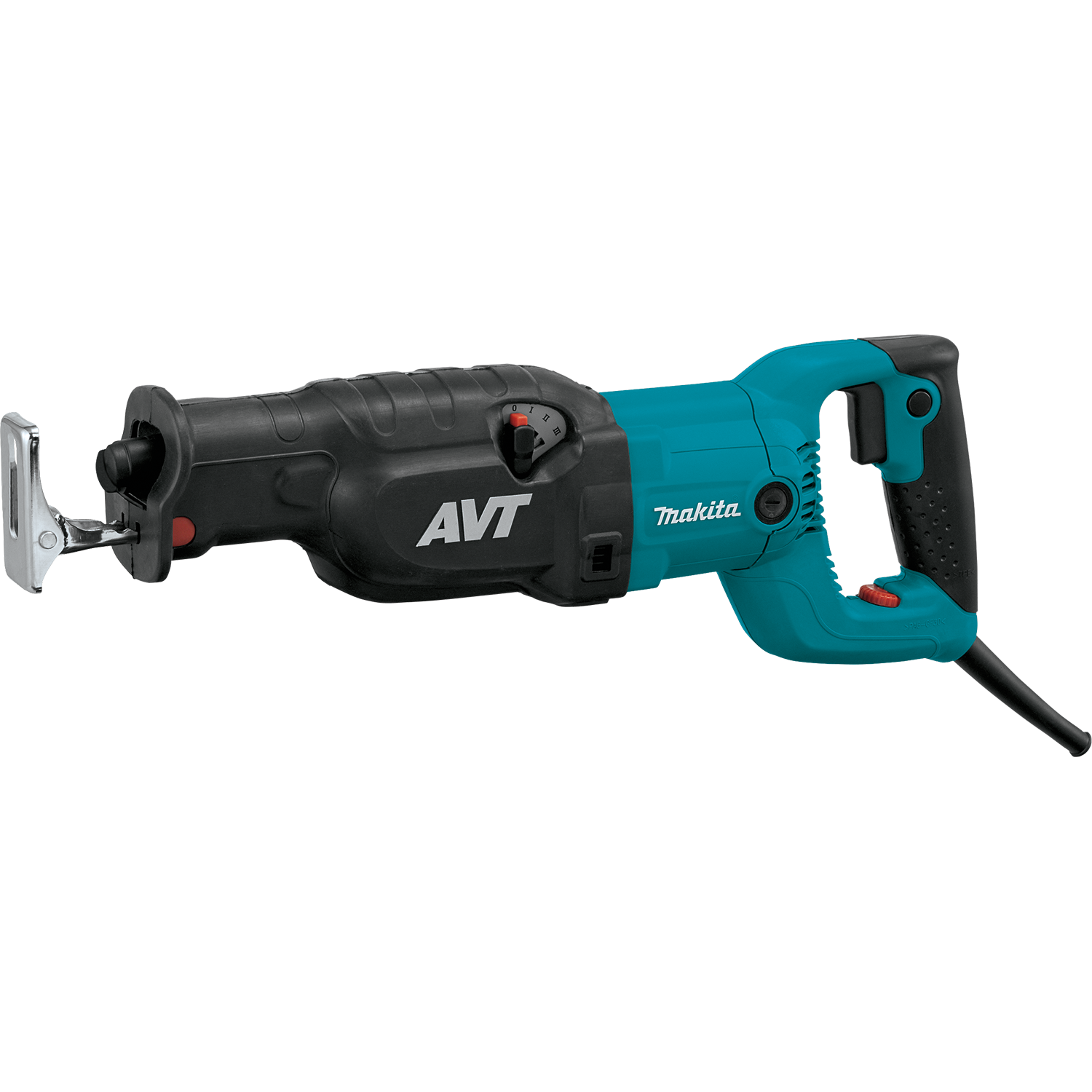
JR3070CTH is the lock-on-button member of Makita's AVT pallet-saw branch. Its U.S. product page identifies a 15-amp corded tool with a high-torque limiter, selectable orbital action and a tool-only package. The closest switch comparison is the newer JR3070CTHZ: the high-torque pallet intent is shared, but the CTH has a lock-on button and HZ does not. This is a document-based comparison, not a firsthand report or performance test.
The high-torque limiter narrows the job
Makita's product page and new-tool flyer describe this as a reciprocal pallet saw and say its high-torque limiter is intended only for high-torque work such as dismantling pallets. That sentence should guide the purchase more than the broad “recip saw” category name. Do not assume the pallet limiter is a bonus for any demolition task, or that the CTH is interchangeable with the standard JR3070CT and JR3070CTZ. The exact standard AVT models share several numerical specifications and orbital controls, but their U.S. pages do not designate them as pallet models with this limiter.
The manufacturer lists 15 amps, variable speed and a built-in clutch that can disengage gears when a blade binds. Those are design details, not a measured cutting result or a guarantee that a blade will never bind. Choose a compatible blade, secure the work, inspect for nails and hidden utilities, and leave enough clearance for the reciprocating blade. The manual warns against oversize stock and says to hold the tool firmly and keep the shoe pressed against the workpiece. Those instructions are especially relevant when the intended job involves dismantling material rather than making a freehand demonstration cut.
Controls for a deliberate setup
The CTH has a trigger plus lock-on button. Makita's shared JR3070CTH/JR3070CTHZ manual describes the model-specific button sequence and cautions that locking a tool on requires continued firm control. If you do not want a lock-on switch, the HZ sibling is the exact no-lock-on variant. Confirm the suffix; similar gallery images and seller shorthand can obscure a control difference that matters to the user.
The exact CTH page lists orbital settings and a keyless blade change. Its manual explains straight and orbital modes and a variable-speed dial. The tool's 0–2,800 strokes-per-minute range is a no-load maximum, not a prediction for a particular blade, cut or material. The five-way shoe adjustment is operated by its shoe button and is described as a way to present unused blade edge; the source does not publish an angular pivot range. The matcher therefore recognizes documented shoe adjustment without implying a measured pivot angle.
Keyless does not mean maintenance-free. Unplug from mains before changing or servicing the blade. The manual says to remove chips from the clamp, insert the blade fully and make sure it cannot be pulled back out. At the cut, brace the work and keep the shoe in firm contact; Makita warns that holding it away can produce strong vibration or twisting and may break the blade. For metal, follow the manual's protection and cutting-fluid cautions.
Package and published weight
The exact U.S. product page says “tool only” and “Case Included: No.” There is no battery or charger to buy for operation, because this is an 8.2-foot-cord mains saw. The page lists 9.7 pounds net and the flyer uses the same number, while the shared manual gives 10.0 pounds and says that manual net weight includes attachments specified for normal and safe use. The two conventions are not reconciled as a bare-tool value. The 12.38-pound shipping-weight field is also not tool weight. This assessment leaves the strict bare-tool field unknown, so an “under 10 pounds” finder answer will not qualify the CTH by guessing.
The manual's maximum capacities are 5-1/8 inches in pipe and 10 inches in wood. Treat them as manufacturer-listed limits under the manual's conditions, not promised capacity through every material or with any blade. Confirm the proper blade length, tooth form and support for the actual cut. The exact page's product image shows one blade attached, but written package contents govern; the CTH listing says tool only and does not list included blades.
When the CTH makes sense on paper
Keep this model on a shortlist only when the corded two-handed format, the documented pallet-saw/high-torque limitation, selectable orbital control, tool-free clamp and lock-on switch all fit your routine. Look elsewhere if a battery platform, included case, included blade, verified bare-tool weight or no-lock-on trigger is essential. The regular CT package is different again: it lists two blades and a steel case and includes a lock-on switch, but lacks the documented pallet-limiter designation. Exact model code, package list, cord routing, manual and blade compatibility deserve a final check before purchase.
Key specifications
Key details at a glance
| Saw format | Full-size, two-handed saw |
|---|---|
| Power source | Corded mains power |
| Motor current | 15 A |
| Stroke length | 1.25 in |
| No-load stroke rate | 2800 SPM |
| Pivot shoe positions | 5 |
| Tool-free blade change | Yes |
| Selectable orbital action | Yes |
| Overall length | 19.12 in |
| Trigger lock-on switch | Yes |
| Battery in this package | No |
| Charger in this package | No |
Use the exact model’s instructions for operating limits, supplied equipment and version differences.
Sources for this review
Sources for this assessment
Match the saw to your actual work.
Use the finder to compare verified requirements, then read each exact model assessment before deciding.