
Your needs, this model
Does it fit your priorities?
How does PSBRS02B differ from PSBRS02K1?
The exact B page lists the PSBRS02 saw and one 10 TPI wood blade only, with no battery or charger; PSBRS02K1 is the same saw in a package that adds a PBP006 2Ah battery and PCG002 charger. The review keeps them separate because the power-system contents differ.
Explore this need in the finder →Can I use PSBRS02B with an existing 18V ONE+ battery?
Yes, the exact product page identifies it as an 18V ONE+ cordless saw; the matching plan is the RYOBI ONE+ battery platform. Confirm the exact pack condition and charger guidance in the manual before use; batteries and charger are not in this B package.
Explore this need in the finder →Does PSBRS02B fit a 3.5 lb bare-tool ceiling?
No by the published exact-model weight: RYOBI lists 3.95 lb for the PSBRS02 tool. A 4.0 lb setting is the next half-pound step and is the first supported ceiling that includes it; the 3.95 lb value is not a battery-on weight.
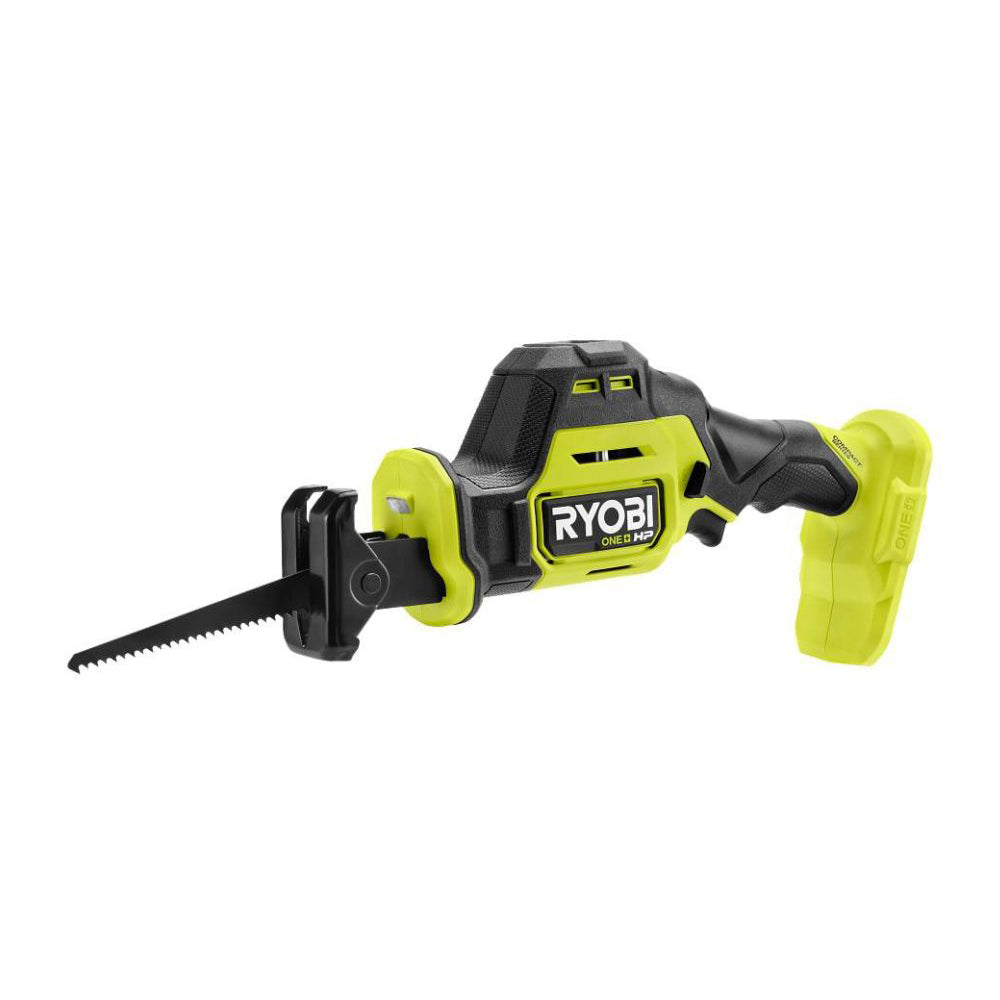
Explore this need in the finder →This is a source-based assessment of the RYOBI PSBRS02B tool-only SKU, not a hands-on test. It is the bare-tool version of RYOBI’s compact brushless PSBRS02 saw, not a separate motor or cutting mechanism from the PSBRS02K1 kit. The practical question is whether you want the compact saw and already have the ONE+ battery system, or whether you want the kit’s battery and charger supplied.
Same saw family, separate package decision
The exact U.S. page identifies PSBRS02B as a tool-only package and lists the PSBRS02 saw with a 10 TPI wood blade. It does not list a battery or charger. By contrast, the [PSBRS02K1 review](/reviews/psbrs02k1/) covers a kit that adds one PBP006 2Ah ONE+ battery and a PCG002 charger. The saw itself is the shared PSBRS02 model, so differences in supplied equipment should not be confused with a different reciprocating mechanism. That separation is useful for an existing ONE+ owner: the B suffix can avoid buying another battery and charger. It is less convenient for a new tool-system buyer because the extra equipment is required for operation and must be obtained separately. Check the full suffix on a retailer listing. The title, battery image or a neighboring option is not a substitute for the actual SKU contents.Compact handling and a short stroke
RYOBI calls the PSBRS02 compact and one-handed and identifies its motor as brushless. Its exact page and manual list a 7/8-inch stroke and a maximum no-load rate of 3,200 SPM. Those values describe how the saw is specified, not a guaranteed cut rate through a particular material. The product page’s “up to 2X faster” comparison is a manufacturer claim about a prior generation, not evidence of independently measured performance on a homeowner’s workpiece. The operator manual describes a variable-speed trigger and an LED work light near the saw head. It also describes a blade clamp that opens by rotating; the blade should be fully seated before use. That is a useful tool-free design, but the work still depends on choosing a suitable blade. The included 10 TPI blade is identified as a wood blade, not a universal blade for the manual’s other material categories. The exact tool-only page publishes 3.95 pounds for the PSBRS02. Because the B package does not include a battery, this is the relevant manufacturer figure for the bare saw rather than a battery-on total. The kit page does not give a clear assembled carry weight. No total should be inferred by adding a guessed battery mass.The shoe detail is easy to overread
The manual says the shoe pivots up and down in both directions. That helps the front of the saw follow a surface during a cut. The exact sources do not call it an adjustable-depth shoe, identify indexed positions or quantify travel. If adjustability is an essential buying condition, treat that as unconfirmed rather than assume that any pivoting shoe meets the requirement. RYOBI’s conventional P519 page explicitly calls its shoe adjustable and pivoting; the PSBRS02 source wording is narrower. For operation, the manual tells the user to secure the workpiece, keep the shoe against the stock, avoid forcing the saw, and maintain clearance around hidden wiring or pipes. The compact shape does not make loose material safe to hold by hand. Remove the battery before blade changes or other adjustments, and follow the manual for material-specific cutting instructions.What the tool-only listing actually buys
The [PSBRS02B page](https://www.ryobitools.com/products/33287211685) is a current U.S. product record whose included list names the saw and 10 TPI blade. It does not include the PBP006 pack or PCG002 charger that appear in the K1 package. That distinction matters more than a broad “18V cordless” label: your existing pack and charger need to be compatible ONE+ equipment, and you should verify their condition and charging instructions. The saw is not the full-size P519. The P519 has a one-inch stroke and a two-handed body; the PSBRS02 trades that longer form for a compact, one-handed configuration. Nor is the PSBRS02 a dedicated limb saw with a removable branch hook and a documented 3-inch pruning boundary like the [P2503BTL](/reviews/p2503btl/). Choose by work layout and control, not a single SPM comparison.Who should shortlist it
PSBRS02B makes sense if you already own RYOBI ONE+ equipment, want the compact brushless body and are comfortable buying a tool-only package. Pause if you need battery and charger in the box, a documented adjustable shoe, known battery-on weight or a maker-stated capacity for a specific cut. Read the manual before using a blade not supplied with the saw, and compare the B suffix with K1 before ordering.Key specifications
Key details at a glance
| Saw format | Compact, one-handed saw |
|---|---|
| Power source | Cordless battery |
| Battery platform | RYOBI 18V ONE+ |
| Motor type | Brushless |
| Stroke length | 0.88 in |
| No-load stroke rate | 3200 SPM |
| Tool-free blade change | Yes |
| Work light | Yes |
| Bare-tool weight | 3.95 lb |
| Battery in this package | No |
| Charger in this package | No |
Use the exact model’s instructions for operating limits, supplied equipment and version differences.
Sources for this review
Sources for this assessment

Match the saw to your actual work.
Use the finder to compare verified requirements, then read each exact model assessment before deciding.