
Your needs, this model
Does it fit your priorities?
Is RJ186V cordless or compatible with a tool battery platform?
No. The exact manual specifies 120V AC, 60Hz, 12A input; it is a corded mains tool and no battery platform is used.
Explore this need in the finder →Does the exact manual establish an adjustable pivot shoe and tool-free blade change?
Yes. It says the shoe pivots and slides in and out, and shows a blade-release lever. The manual lists a 1-1/8-inch stroke, up to 3,000 SPM, variable speed and 120V AC, 60Hz, 12A. Follow its blade and material instructions.
Explore this need in the finder →What is listed in the package, and what weight can I use?
RYOBI's exact page lists one wood-cutting blade and the manual; no bare-tool mass is established by the reviewed manufacturer material. A retailer's product-weight field is not used as tool-only weight without a stated basis.
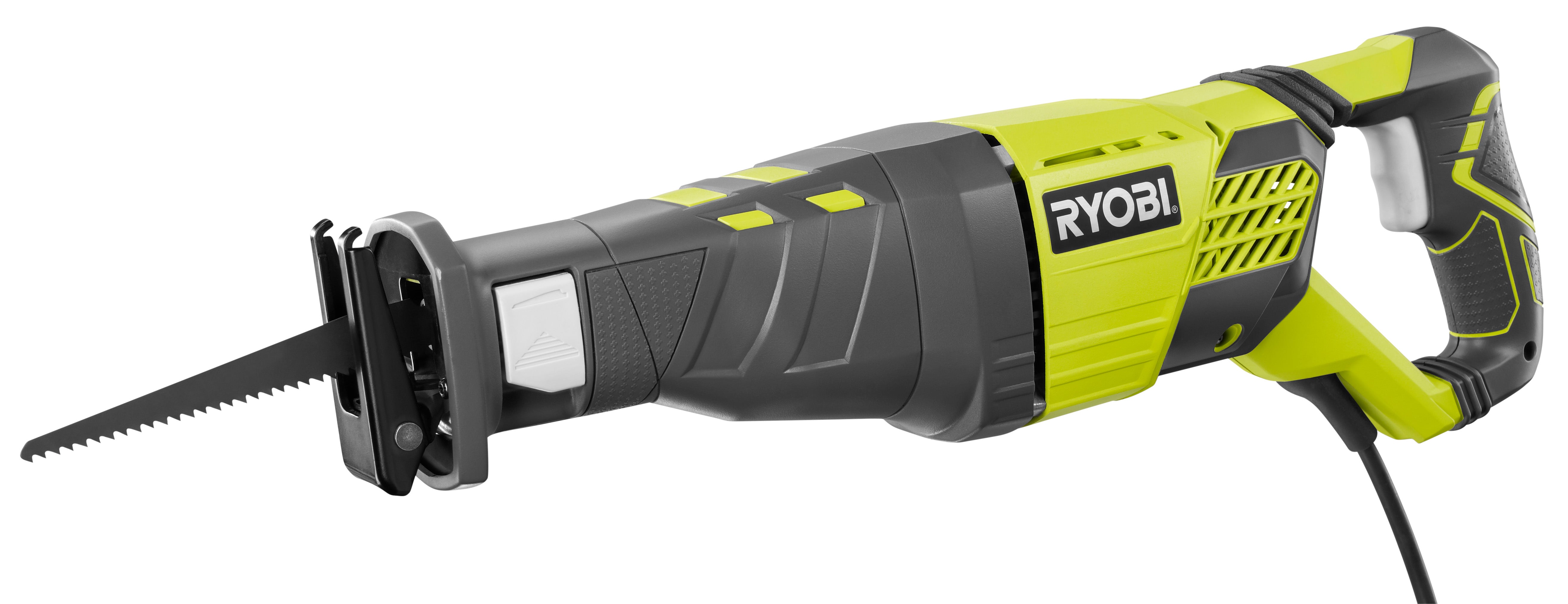
Explore this need in the finder →The RYOBI RJ186V is a corded, variable-speed reciprocating saw, not an 18V ONE+ battery model. This assessment uses its exact U.S. product page, an RJ186V/RJ1861V operator’s manual and the official product-page image. It is not a hands-on review: no cuts, current draw measurements or personal ownership are claimed.
A corded alternative to platform-specific saws
The manual identifies 120V AC, 60Hz, 12A input and a no-load range up to 3,000 strokes per minute. The stroke is 1-1/8 inches and the trigger is variable speed. Unlike the cordless RYOBI saws in this guide, the RJ186V needs a suitable mains outlet and a safe cord route. It does not use a battery platform, so it avoids selecting among tool batteries but ties the working area to a power source and cord management.
RYOBI’s page describes a heavy-duty motor and states a three-year manufacturer warranty; these are manufacturer statements, not evidence of a measured service life. The combination of a 12A rating, speed range and stroke length helps distinguish the tool on paper, but none of those figures alone predicts progress through a particular material. Blade type, workpiece support, cut access, feed force and the electrical setup all matter.
Adjustable shoe and tool-free blade lever
The model manual specifically says the shoe both pivots and slides in and out. That supports treating RJ186V as having an adjustable pivot shoe, unlike a tool for which only pivoting is documented. It lets the operator change which part of the blade teeth is in use; follow the manual’s steps and secure the adjustment before cutting. The manual also shows a blade-release lever for installing and removing a blade without a separate tool. Its specifications give a 1-1/8-inch stroke, maximum 3,000 SPM, variable-speed switch and 120V AC, 60Hz, 12A input.
Those features answer two strict finder questions, but do not remove the need for careful setup. The instructions warn about hidden electrical wiring and other concealed hazards, require a secured workpiece, and caution against forcing or twisting the blade. Follow the exact manual for blade length, material, cord and plunge-cut limitations; the manual notes that blades longer than six inches can whip. A quick-release clamp is not a substitute for battery or mains isolation before blade service—this model is corded, so disconnect the plug as directed.
Package and weight need an exact check
The U.S. RYOBI page lists one wood-cutting blade and a three-year warranty. The exact page’s package area and model manual do not establish a bare-tool weight in the reviewed evidence. A retailer may list a generic product or shipping weight, but without a declared basis it should not be converted into a bare-tool number. The finder therefore does not let RJ186V qualify against a strict maximum-weight requirement.
The exact product image shows a power cord, reinforcing that the tool is not cordless; it does not establish what else is packed with a particular seller’s offer. Confirm that the listing is RJ186V rather than another saw in a similar RYOBI family, check the one-blade package detail and read the RJ186V/RJ1861V manual for the operating and electrical instructions. The page names a wood-cutting blade, not a blade suited to every demolition material.
Where it fits beside cordless models
A corded saw can be practical when the job is near mains power and a cord can be kept clear of the blade and work area. It is not a replacement for cordless convenience on ladders, in remote framing or wherever an extension lead creates a snag or trip hazard. RYOBI’s battery-platform models offer a different logistics choice: they need a suitable pack and may use batteries already in a buyer’s system, but their runtime depends on the battery and task.
RJ186V is full-size and two-handed in its traditional saw layout, while PSBRS01B is explicitly compact and one-handed. Its adjustable sliding shoe is also directly documented in the manual; for cordless products whose pages mention only a pivoting shoe, the same requirement remains unconfirmed. The comparison is not a blanket recommendation: match power access, safe control, package contents and documented requirements before comparing advertised maxima.
Who should shortlist RJ186V
It is a sensible candidate to investigate if you want a conventional two-hand format, have accessible 120V power and value the documented adjustable shoe and tool-free blade release. Do not shortlist it as a battery-platform answer, a known bare-tool-weight pick or a guaranteed performer on a specific material. Confirm the exact model suffix, inspect the cord and blade offered, and use the manufacturer’s manual for electrical safety, workpiece clamping and blade selection. This page reports what the source documents, not a performance test, customer rating or current price.
Key specifications
Key details at a glance
| Saw format | Full-size, two-handed saw |
|---|---|
| Power source | Corded mains power |
| Motor current | 12 A |
| Stroke length | 1.12 in |
| No-load stroke rate | 3000 SPM |
| Tool-free blade change | Yes |
| Battery in this package | No |
| Charger in this package | No |
Use the exact model’s instructions for operating limits, supplied equipment and version differences.
Sources for this review
Sources for this assessment

Match the saw to your actual work.
Use the finder to compare verified requirements, then read each exact model assessment before deciding.