
Your needs, this model
Does it fit your priorities?
What does PS60-102 include compared with PS60N?
Bosch lists the PS60-102 as a kit with one 12V Max 2.0Ah lithium-ion battery, a 12V Max charger, one wood blade, one metal blade and a carrying bag. The exact PS60N page labels its version bare tool and lists the saw plus two blades, with no case. Verify the suffix and written in-box list rather than inferring contents from a product image.
Explore this need in the finder →Does the PS60 manual support a one-handed cutting plan?
No. Bosch describes a compact pocket saw, but the PS60 operating instructions tell the user to hold the rear handle with one hand and the insulated front boot with the other, clamp the work, and keep the footplate on the stock. This assessment classifies the body as compact but the safe operating arrangement as two-handed.
Explore this need in the finder →Is the PS60-102 weight figure a loaded kit weight?
No. Bosch lists the PS60-102 at 2.2 lb and the exact PS60N bare-tool page identifies the same tool part number, 3601F4L910, while explicitly calling the same 2.2 lb value tool-only. Treat 2.2 lb as the saw body weight, not as the kit weight with its battery, charger, blades and bag.
Explore this need in the finder →The PS60-102 is a complete 12V kit around Bosch’s small PS60 saw
Bosch lists the PS60-102 as a 12V Max pocket reciprocating-saw kit with one 2.0Ah battery. The in-box list adds a 12V charger, a wood blade, a metal blade and a carrying bag. That makes this the better-defined starting package of the two current U.S. PS60 entries: the separate PS60N is explicitly a bare tool and has no case. Neither name should be collapsed into a generic “Bosch 12V saw” listing; check the exact suffix and written box contents when comparing a seller’s offer.
A pocket body, but not a license to saw one-handed
The exact page calls this an 11-inch pocket saw and lists a 2.2-pound tool weight. Bosch’s bare-tool PS60N page gives the same 3601F4L910 tool part number and explicitly identifies that 2.2-pound figure as tool-only, so the two model pages support treating the PS60-102 as the same saw body with different package contents. The figure is not the carried kit weight: the battery, charger, blades and bag add to what goes in a tool case or onto a belt.
The product’s compact body is useful for reaching into tight areas, but Bosch’s PS60 operator manual tells the user to hold the handle with one hand and the insulated front boot with the other, keep the footplate against the work, and let the blade reach speed before entering the cut. For this guide’s matching purposes that safe-use instruction takes precedence over calling the saw a one-hand cutter. It is a compact-bodied, two-handed reciprocating-saw arrangement—not a promise that an unsupported or awkward overhead cut is safe.
Short stroke and controlled trigger have a specific role
The PS60 manual specifies a 0.57-inch stroke, variable trigger and a no-load range up to 3,000 strokes per minute. These are identification and setup specifications, not independent cut-rate results. The relatively short stroke and small battery system frame the tool as a reach-and-access option for modest repair or trim removal rather than as a substitute for a larger demolition saw when long, forceful cuts are the main task. Bosch’s product page names examples such as copper and conduit, but the correct blade, material thickness, support and power condition still matter; the maker does not publish a universal cut-through guarantee here.
The manual also identifies a lock-off switch, battery charge indicators and a red temperature/stall indicator. Those protections do not remove the need to remove the battery before a blade change. The PS60 uses a twist collar and spring-loaded clamp: seat the blade fully, release the collar, then push and pull the blade to verify the retaining pin is engaged. Bosch warns that a blade must remain beyond the footplate and work throughout its stroke; a blade that is too short or tilted can jam or break. Keep the footplate in contact with supported stock and do not force the cut.
Where the kit is convenient—and where the small format is limiting
The kit’s strongest practical advantage on paper is completeness: a named 2.0Ah Bosch 12V Max pack and a charger are included, along with two blade types and a bag. That is useful for someone entering the tool’s battery system, but it is not evidence of a particular runtime. The reviewed sources do not provide an independently measured run time, cut count, loaded speed, vibration result or durability test. A small-capacity pack may mean more frequent battery changes during sustained work; treat that as a planning consideration, not a quantified result.
The exact page gives an 11-inch length and 2.3-inch width, but it does not establish an adjustable shoe, selectable orbital action or a bare-tool hang hook. Those features should remain unanswered rather than borrowed from a larger Bosch model. If your task requires a long blade reach, fast repeated cuts through thick stock, or a documented adjustable shoe, compare full-size options and read the model-specific manual before choosing.
Buying checks and assessment limits
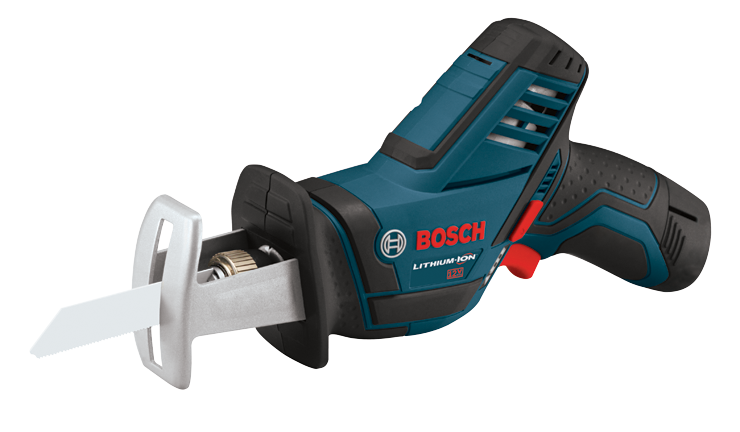
Before buying, confirm the exact PS60-102 suffix, the included one 2.0Ah 12V Max battery and charger, and whether the seller still has both listed blades and the bag. The image on this page is the exact PS60 saw body but does not depict the kit accessories, so use the manufacturer’s written package list to verify what is included. If you already own Bosch 12V equipment, check the battery and charger model compatibility against Bosch’s current guidance rather than relying on the voltage label alone. The current finder does not have a Bosch 12V Max-specific platform choice; a cordless match therefore does not prove that you already own or want this battery system.
This is a source-based assessment of Bosch’s current U.S. reference page and PS60 manual, not a hands-on review. The saw was not used, tested, owned or measured for this article. Product-page descriptions are manufacturer statements, not independent performance findings. Confirm the exact tool label and package before purchase, and use Bosch’s manual for blade selection, battery removal, work support, electrical hazards and protective equipment.
Bosch PS60-102 product and package record · Compare the PS60N bare-tool configuration · Bosch PS60 operating manual
Key specifications
Key details at a glance
| Saw format | Compact-bodied, two-handed saw |
|---|---|
| Power source | Cordless battery |
| Battery platform | Bosch 12v max |
| Stroke length | 0.57 in |
| No-load stroke rate | 3000 SPM |
| Tool-free blade change | Yes |
| Work light | Yes |
| Bare-tool weight | 2.2 lb |
| Overall length | 11 in |
| Trigger lock-on switch | No |
| Battery in this package | Yes |
| Charger in this package | Yes |
Use the exact model’s instructions for operating limits, supplied equipment and version differences.
Sources for this review
Sources for this assessment
Match the saw to your actual work.
Use the finder to compare verified requirements, then read each exact model assessment before deciding.